Toyota just made a major move. The company took one of its best-selling family SUVs and ditched every gas and hybrid option in favor of a fully electric powertrain. The 2027 Highlander arrives as a battery-electric vehicle only, marking a bold shift for a brand that spent years championing hybrids. For U.S. buyers, this shakes up the three-row SUV market in a big way.
- The 2027 Highlander offers two battery sizes and up to 320 miles of estimated driving range, plus new multimedia tech and seating for seven.
- The new Highlander is Toyota’s first three-row EV for the U.S. market and the first electric car built at one of its American factories.
- It’s the first Toyota EV in the U.S. to offer bidirectional charging, allowing owners to back up their home or power other devices.
What’s Under the Hood (or Lack Thereof)
Gone is the familiar V6. Gone is the hybrid drivetrain that Toyota championed for over a decade. Toyota will make the 2027 Highlander SUV exclusively battery electric, dropping other powertrains. Buyers can choose from either a 77-kWh or 95.8-kWh battery pack. The AWD models produce 338 combined system horsepower and 323 lb.-ft. of max torque, which gives the Highlander a noticeable kick off the line compared to the outgoing gas model.
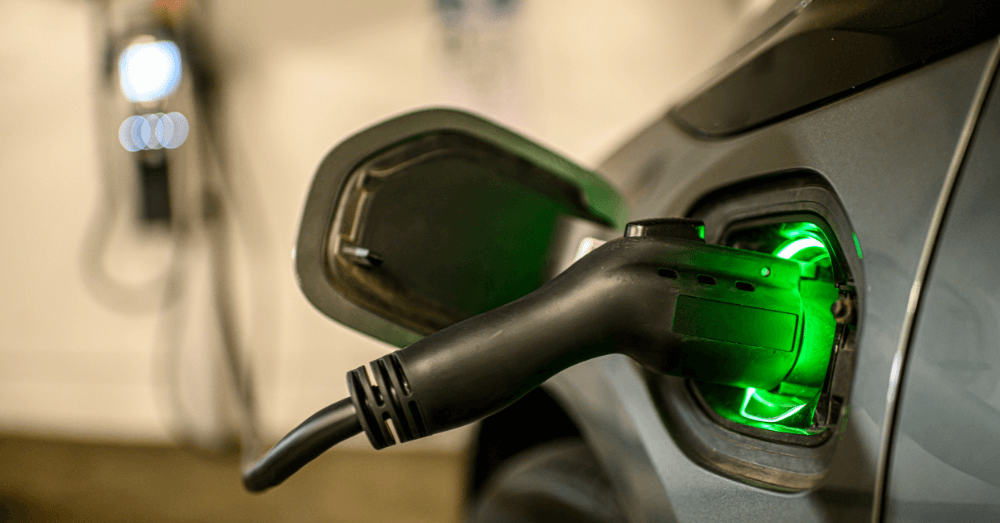
It’ll be offered with front- or all-wheel drive, with seating for seven. The Highlander should be able to charge from 10% to 80% in about 30 minutes. Toyota also included an NACS charging port, giving owners access to thousands of DC fast charging stations across the country, including Tesla Superchargers.
Made in America, Priced to Compete
Assembled in Kentucky, the 2027 Highlander will be available with two battery options. Its battery modules will come from Toyota’s newly opened $13.9 billion battery plant in Liberty, N.C. That domestic production chain means the Highlander should dodge automotive tariffs, which could keep pricing in check.
Pricing hasn’t been announced yet, but logic dictates that it should be in the same neighborhood as the Kia EV9 and Hyundai Ioniq 9, which range from roughly $55,000 to $80,000. That would put it well above the current gas-powered Grand Highlander, which starts around $43,000. But Toyota is clearly positioning its EVs as more premium entries in the lineup.
How It Stacks Up Against Ford Explorer and Chevy Traverse
The three-row SUV market is one of the most competitive spaces in the U.S. auto industry, and the Highlander is walking into a neighborhood still dominated by gas-powered trucks. The 2026 Ford Explorer runs a 2.3L EcoBoost I-4 engine with available Intelligent 4WD, and a more powerful 3.0L EcoBoost V6 is available on select trims. Ford has hinted at hybrid and electric options down the road, but the U.S. market version for 2027 is expected to continue focusing on gas and hybrid options.
The 2026 Chevrolet Traverse comes equipped with a 2.5-liter turbocharged I-4 engine that generates 328 horsepower and 326 pound-feet of torque. It seats up to eight and starts around $40,800. Neither the Explorer nor the Traverse offers a fully electric option for American buyers right now, which gives the Highlander an open lane in this segment.
Toyota believes it is the right time for such a move as there aren’t that many all-electric three-row midsize crossovers currently on sale. The Kia EV9 and Hyundai Ioniq 9 are the main electric competitors, while traditional rivals like Ford and Chevy remain on gas and diesel power for their midsize family haulers.
Tech That Separates the Highlander
Inside, the 2027 Highlander brings a thoroughly modern cabin. It gets a driver-focused cockpit with a 12.3-inch digital instrument cluster and a 14-inch central touchscreen running Toyota’s latest-generation infotainment system. That system features 5G connectivity from AT&T, an embedded voice assistant, and wireless Apple CarPlay and Android Auto. There’s also a built-in dashcam feature called Drive Recorder.
The bidirectional charging feature is a standout. The three-row EV will be Toyota’s first with bidirectional charging capability, also known as vehicle-to-load, or V2L, allowing Highlander owners to power up coffee makers on a camping trip or serve as emergency backup power at home during outages. Scheduling routine Toyota service at your local dealer will keep the battery system and software running at their best over the long haul.
Toyota equips the 2027 Highlander with the updated Toyota Safety Sense 4.0 system, which includes pre-collision braking with pedestrian detection, lane tracing assist, and adaptive cruise control.
Is This the Right Time to Go Electric?
Toyota’s timing is interesting, to say the least. The new Highlander comes as EV sales have been cooling in the U.S., with the loss of the federal EV tax credit putting a damper on buyer enthusiasm. But Toyota’s leadership seems undeterred. “This is not a niche product,” David Christ, Toyota’s Group Vice President and General Manager, told Automotive News.
The current Grand Highlander, which is slightly larger and less expensive than the Highlander, will continue to be available with gas and hybrid powertrains. That gives Toyota a safety net. Families who aren’t ready for an EV can still grab a Grand Highlander, while early adopters get a three-row electric SUV with 320 miles of range and a brand name they already trust.
The Highlander goes on sale at the end of 2026. If Toyota can price it competitively and keep the charging experience smooth, this could be the EV that finally brings mainstream families off the fence. And with Ford and Chevy still leaning on gas engines in this class, the Highlander has a window to carve out a real lead.