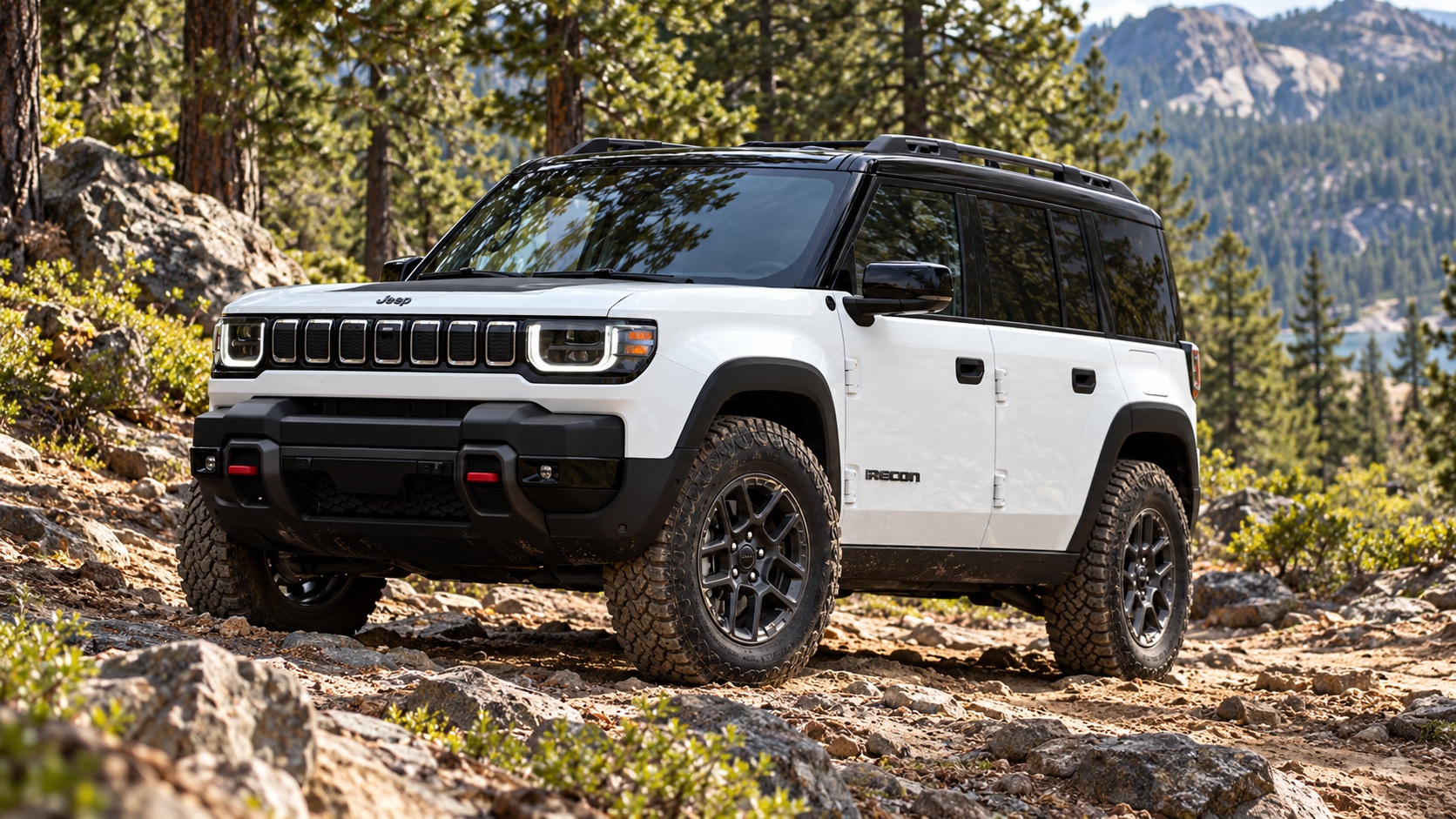
Jeep’s first Trail Rated electric SUV is finally here, roughly two years behind schedule. The 2026 Recon pairs serious trail hardware with a wild 670 horsepower. Early drive impressions suggest it feels less settled on pavement and asks a lot of money for what it offers.
- The Recon Moab pairs 670 hp with underbody armor, a rear locker and two feet of fording depth.
- Early testing found it very quick in a straight line but floaty and vague at speed.
- The Moab is rated at 222 miles of range, and its $66,995 price raises value questions.
A Long Wait for the First Trail Rated Electric Jeep
Jeep first announced the Recon in 2022 as a 2024 model. The launch slipped at least twice, and production is only now getting underway in 2026. Byron Hurd, who drove an early Recon in California, argued that the delay chipped away at its relevance.
It shares the STLA Large platform with the Wagoneer S. Two 250 kW motors produce 670 horsepower and 620 pound-feet of torque, fed by a 100.5-kWh nickel manganese cobalt battery on a 400-volt system. All in, it weighs 6,112 pounds.
Trail Hardware That Backs Up the Moab Badge
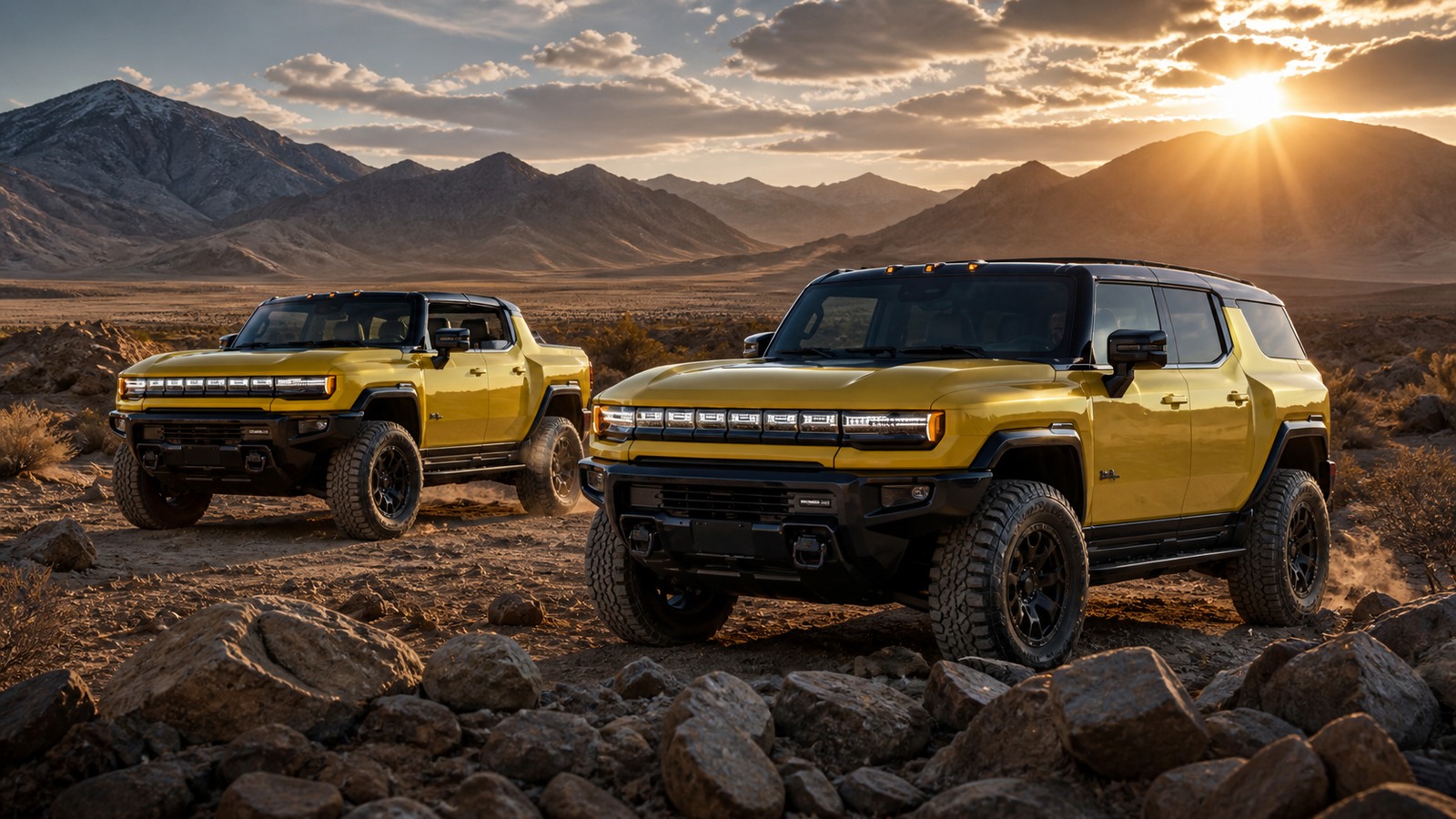
The launch model is the Recon Moab, and it comes ready to get dirty. Armor covers virtually the entire underbody. Jeep waterproofed the battery and electrical system for a fording depth of two feet and added a push-button electronic locking differential to the rear axle. Like the Wrangler and Gladiator, the Recon also lets you remove its doors and rear windows.
A Rock mode, offered on the Moab but not the Overland, allows left-foot braking and adds a hill holder. Paired with strong regen, Hurd said it comes close to the feel of a crawler gear, and he recommended it on wet rocks. On Jeep’s own course, he found the camera system nearly indispensable on wooded hillsides. The low, battery-heavy center of gravity kept things calm as he nudged close to 30 degrees in a ditch, and a water crossing around 17 to 18 inches deep caused nothing worse than a clunk on entry. None of the obstacles proved tough. On a second pass, he skipped Rock mode and the locker and still made it with careful throttle work.
Blistering Launches, Softer Road Manners
Jeep claims 0 to 60 mph in 3.6 seconds in Sport mode and 3.8 seconds in Auto. The knobby tires skitter a bit on hard launches, but that’s mostly noise.
Once up to speed, Hurd found the Recon floaty and vague, without the tighter feel of the Wagoneer S. He blamed the all-terrain tires, which at least stay fairly quiet. It’s also easy to carry more speed into curves than the Recon handles gracefully. Max regen helps by allowing one-pedal driving through most corners, which Hurd found more engaging than swapping pedals.
The prototypes he drove showed some rough tuning. Moving from the brakes to regen and back to the throttle sometimes made the driveline buck, a bit like a sloppy downshift in a manual car. Whether production models behave the same way remains to be seen.
Range and Charging by the Numbers
The Moab is rated at 222 miles. The upcoming Overland is rated at 240 miles, thanks to a lighter, more aerodynamic wheel and tire setup. Jeep says a DC fast charger can take the battery from 5 to 80 percent in as little as 28 minutes, and a capable station can add 100 miles in about five. The built-in Level 2 charger needs roughly 6.8 hours.
Hurd’s drive offers a reality check. His road vehicle started at 88 percent with 180 miles showing and had 63 miles left when he departed the off-road venue. Heavy regen on a dusty two-track clawed a few miles back, and he finished at 38 miles, or 17 percent. Jeep used separate vehicles for the trail work, so those figures cover road driving only.
Weighing the Recon Before You Buy
At $66,995 including destination, the Recon asks a lot, and Hurd wasn’t sold on the value. He granted that 670 horsepower makes passing easy but questioned why an off-road SUV needs it, pointing out that the Wrangler spent more than 30 years without a V8.
If you want an electric Jeep that can handle a real trail, the Moab has the armor, locker and water protection to back up its badge. Highway commuters should pay close attention to ride and steering feel on a test drive, since the all-terrain tires affect so much of it. Range-focused buyers may want to wait and see how the Overland stacks up once it arrives.