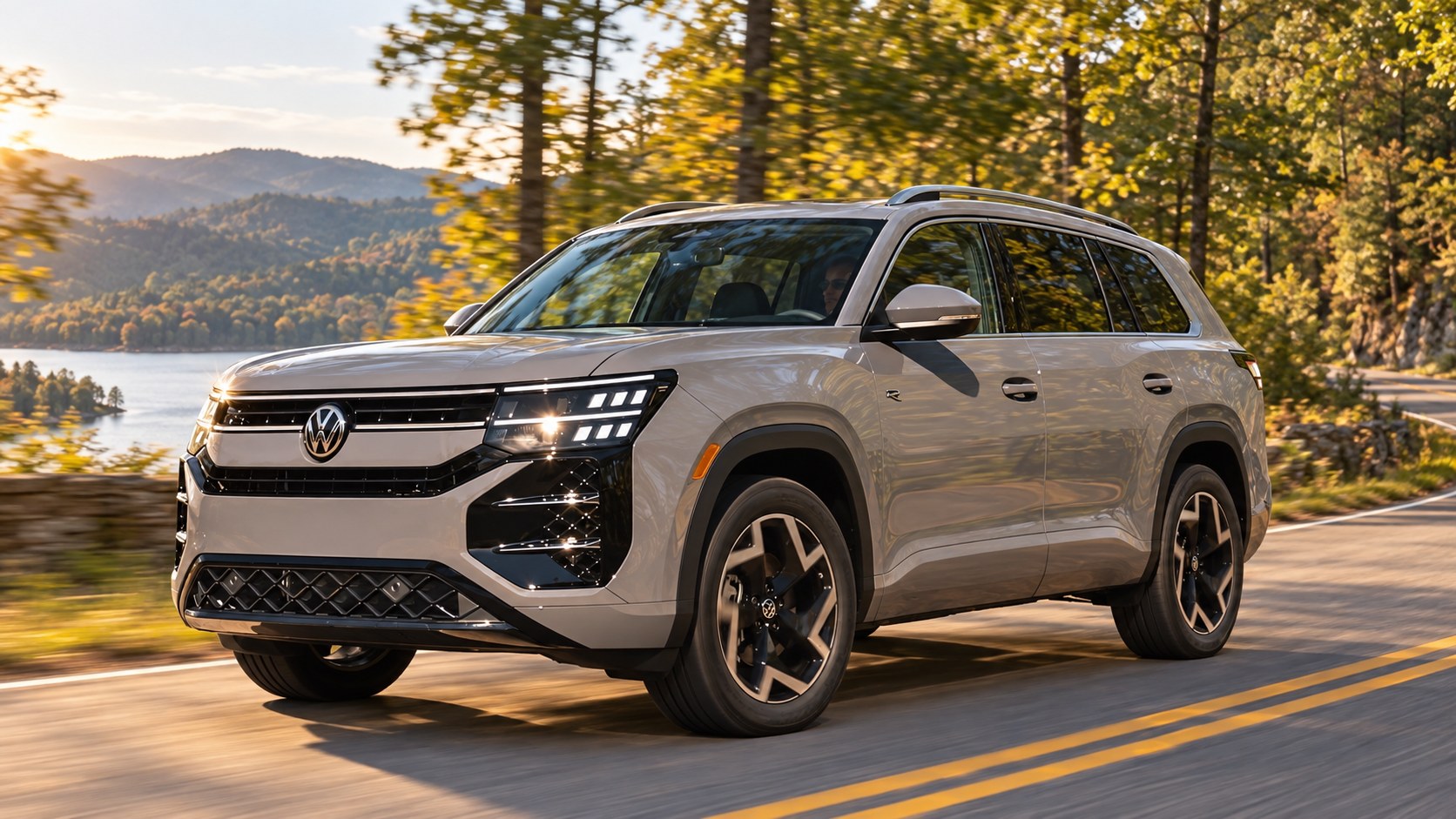
Volkswagen had a lot riding on its next Atlas. The three-row SUV is on track to make up roughly a third of the brand’s US sales, and it’s held that spot even as the old model aged. The second-generation 2027 Atlas has now hit the road, and it plays things safe with a careful update. Families will find plenty to like, along with a few things that might send them to other showrooms.
- The 2027 Atlas gets a new exterior, a Tiguan-inspired cabin and a 282-horsepower turbo four-cylinder.
- It rides firmer and feels more planted, but the steering gives little feedback and the touch controls can be annoying.
- Pricing starts at $43,135 with destination, which puts it above several key rivals.
An Update That Builds on What Already Worked
Volkswagen didn’t tear up the Atlas formula. The new model rides on an updated version of the company’s MQB Evo architecture. It wears all-new sheet metal and gets a cabin that borrows heavily from the smaller Tiguan. The changes are real, but they build on the last Atlas instead of replacing it.
That approach makes sense when you look at the bigger picture. Volkswagen says eight out of every 10 vehicles it sells in the US are SUVs, and the seven-passenger Atlas is a big part of that story.
How the New Atlas Feels on the Road
The turbocharged 2.0-liter four-cylinder now makes 282 horsepower, which is more than before. On winding roads outside Huntsville, Alabama, it pulled hard enough to make merging and passing feel easy. The eight-speed automatic keeps the engine in its sweet spot and rarely hunts for gears or revs for no reason.
Flip into Sport mode and the transmission will hold the gear you pick. Paddle shifters let you take over when the road gets fun. Front-wheel drive is standard, and 4Motion all-wheel drive doesn’t cost much more. If your winters bring regular snow, it’s an easy upgrade to justify.
The suspension is tuned tighter than before. The ride is firmer but never harsh, and the Atlas stays composed in corners with little body roll for something this big. The steering is direct and light, though it’s also numb. You can place the Atlas exactly where you want it, but you won’t feel much of what the front tires are doing.
A Cabin That Looks Pricier Than It Is
Inside, the SEL R-Line tester was a clear step up from the old Atlas. The fresh layout and new materials make the cabin look more upscale than its price suggests, at least at first glance. Real wood trim now runs across the dash. It looks good but feels surprisingly thin. There’s still plenty of piano-black plastic too, and it picks up fingerprints and dust fast.
The bigger 15.0-inch infotainment screen dominates the dash. Temperature and volume use capacitive touch controls, and they can be hard to read in direct sunlight, just like in the Tiguan. Every other climate function lives in the touchscreen. A physical knob between the seats handles volume and doubles as the drive mode selector, which helps a bit.
Price and Rivals Families Should Compare
This is where the Atlas has to work harder. The base SE starts at $43,135, including a $1,525 destination charge. That’s $2,350 more than before. It also costs more than the 2027 Chevrolet Traverse at $43,085, the 2027 Hyundai Palisade at $41,385 and the 2027 Ford Explorer at $40,475, and all three make more horsepower.
Then there’s the other big name in the segment. The Kia Telluride is also new for 2027, it’s bigger and more luxurious than before, and a hybrid version is available. Car and Driver and MotorTrend both recently put it head to head with the new Atlas. If it’s on your list, drive both back to back on the same day. The Atlas makes its case with a quiet, comfortable ride and an easygoing feel. Some rivals give you more horsepower for less money, so figure out which of those things your family really cares about.
Test Drive the Controls Before You Sign
The 2027 Atlas is better than the model it replaces in nearly every way. It’s quicker, more composed and nicer inside. All that new tech has cost it a little personality, though.
Start your test drive by adjusting the climate and volume. If capacitive controls bug you after ten minutes, they’ll bug you a lot more after ten months. If they don’t, the Atlas is a quiet, capable family hauler that deserves a spot on your list.